Research has commenced to address critical knowledge gaps regarding the potential environmental impacts of releasing a virus to control carp populations in Australia and to inform effective risk management strategies.
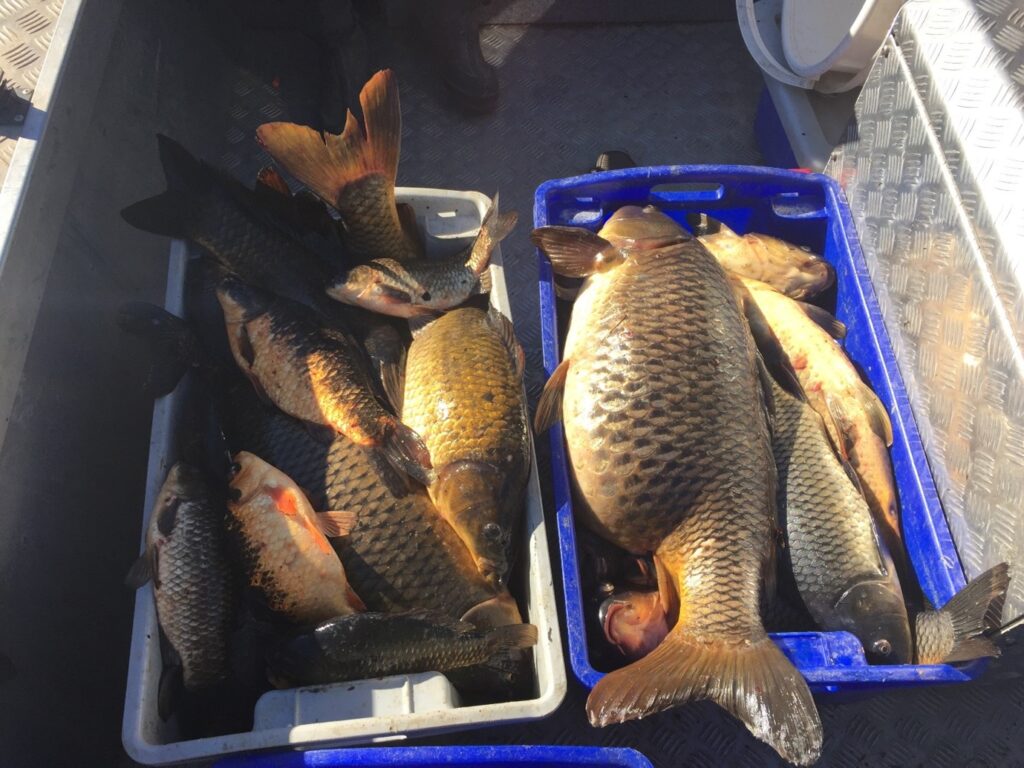
The common carp is among the world’s worst invasive species and in Australia carp now dominates aquatic ecosystems and pose a significant threat to our native species. The carp virus has been proposed as a biological control agent to sustainably control carp populations at a landscape scale and to mitigate the impacts that carp are having in Australia.
The National Carp Control Plan (NCCP), published in 2022, produced a considerable body of research to understand the potential environmental impacts of releasing the virus into our aquatic systems, as well as how the virus may spread and strategies to implement the safe release of the virus. The NCCP also recommended more research to address a series of knowledge gaps to further understand the implications of releasing the virus.
Following on from the NCCP, the Australian Government’s Carp Biological Control Program is addressing these knowledge gaps to enable evidence-based decisions and national coordination on the safe and effective potential use of the carp virus. The Goyder Institute for Water Research in collaboration with experts from CSIRO, Adelaide University, Charles Sturt University and industry is delivering new research to address knowledge gaps relating to the impacts on Australia’s threatened species and ecological communities.
The project, funded by the Australian Government through the Department of Agriculture, Fisheries and Forestry will evaluate the potential impacts of carp virus release on Matters of National Environmental Significance (MNES) and explore management options to reduce potential risks of releasing the virus to acceptable levels. The work will build on existing knowledge established under the NCCP to support regulatory risk assessment and evidence-based decision-making regarding release of the virus.
Dr Alec Rolston, Director of the Goyder institute for Water Research said:
“This research will provide important insights to ensure that any potential environmental impacts of controlling carp populations through the release of the virus are well understood and that risk mitigation strategies are supported by robust, evidence-based science.”
The Australian Chief Environmental Biosecurity Officer, Dr Bertie Hennecke, said:
“The Australian Government remains committed to evidence-based decision-making. The carp virus cannot be removed once released into waterways, so thorough research is essential before deciding whether to use it as a biological control agent. The Goyder Institute for Water Research’s work will provide essential data on potential environmental impacts and management options that must be understood before any decision is made about releasing the virus into Australian waterways.”
The project officially commenced in January 2026, with initial activities underway.
For more information, visit Carp Biological Control Program – DAFF.
Media enquiries:
Dr Alec Rolston
Direct, Goyder Institute for Water Research
E: director@goyderinstitute.org
M: 0405 846 275